GPT-Image-2: What OpenAI's Latest Image Model Actually Changes
By the PicFixer.ai Research Team | April 2026
GPT-Image-2: What OpenAI's Latest Image Model Actually Changes
Updated: 2026-04-23
TL;DR —
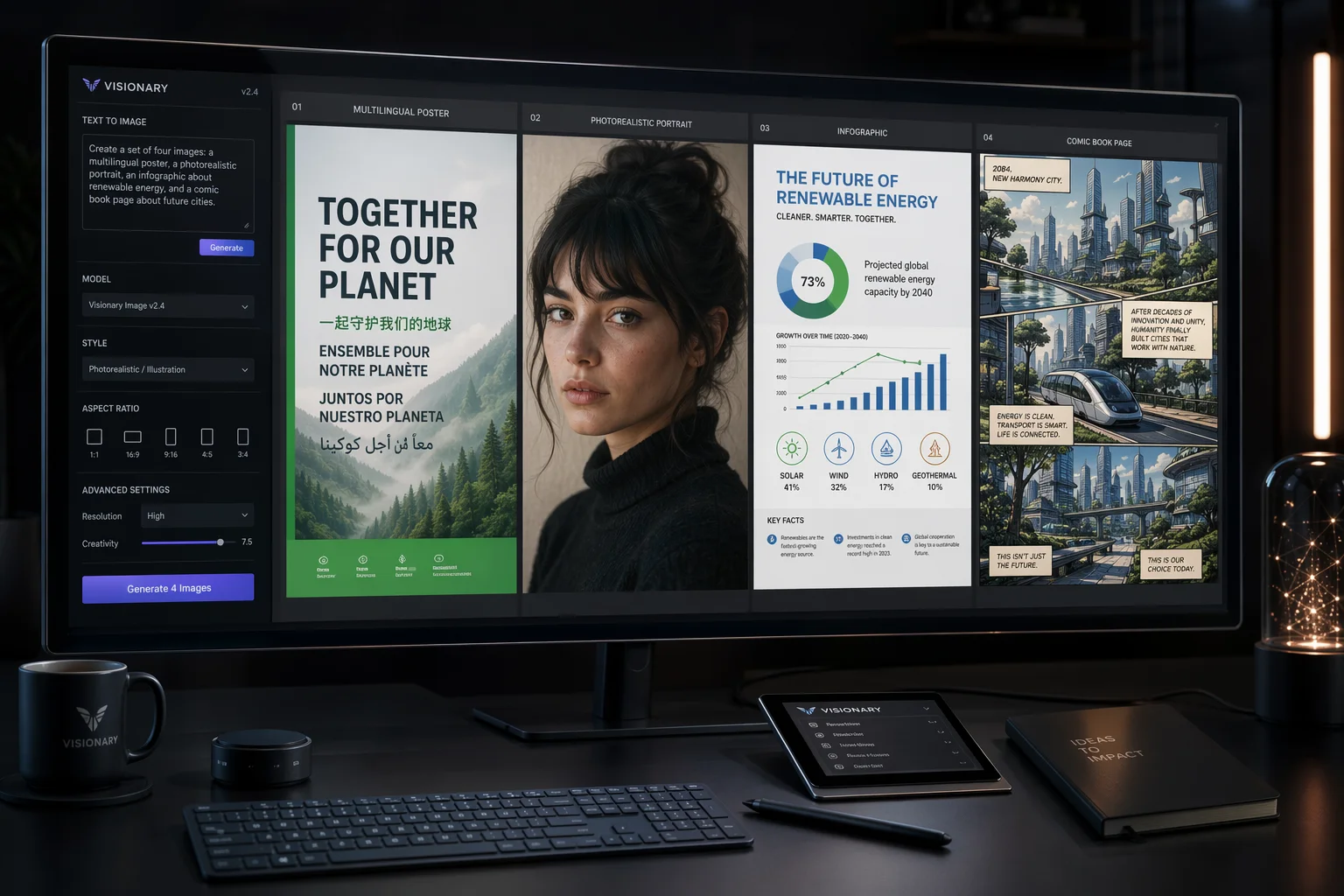
gpt-image-2is OpenAI's current flagship image model. The real story isn't "prettier pictures." It's that image generation has finally crossed the line from mood board material into production-grade visual output you can actually ship to users.
The headline
gpt-image-2 is not a minor refresh. It's the model OpenAI is now positioning as the default for any new work involving image generation or editing. Four upgrades matter more than the rest:
- Reliable text rendering — posters, infographics, comic panels, multilingual promo art.
- Stable editing — reference images, character consistency, masked edits, iterative refinement.
- Structured layouts — infographics, diagrams, multi-panel comics, not just single hero images.
- Photorealism with world knowledge — outputs that look like real things, placed in real contexts.
If you're building a SaaS, a design tool, a content platform, an e-commerce store, a branding workflow, or anything else that needs editable image output, this is a meaningful step up from prior models.
What it actually is
OpenAI launched ChatGPT Images 2.0 on April 21, 2026 — their new-generation image model, internally named gpt-image-2. Its positioning is clear:
- The default GPT Image model going forward
- Text-to-image and image editing in one model
- Accepts both text and image input
- Outputs images
- Focus: high-quality generation, reliable editing, strong instruction following, complex layouts, in-image text, photorealism, and world knowledge
What's actually new
1. Text-to-image
The baseline. But the point of gpt-image-2 isn't "it can paint" — it's controllable painting. OpenAI's docs describe strong instruction following and contextual awareness grounded in broad world knowledge.
In practice, it's well-suited to:
- Brand key visuals, banners, OG images
- Promotional posters
- Article illustrations
- UI concept art
- Character design sheets
- Instructional illustrations
- E-commerce and marketing assets
2. Image editing
This is where the real progress shows up. The docs repeatedly emphasize editing performance, in two common patterns:
- Whole-image editing — feed in an image and prompt a change to style, material, composition, or content
- Masked editing — modify only a selected region while preserving everything else
What becomes genuinely useful:
- Reference-driven variations
- Local repainting
- Face and character consistency
- Batch tweaks to brand assets
- E-commerce: swapping products, backgrounds, props
- Iterating on existing artwork instead of regenerating from scratch
3. In-image text and typography
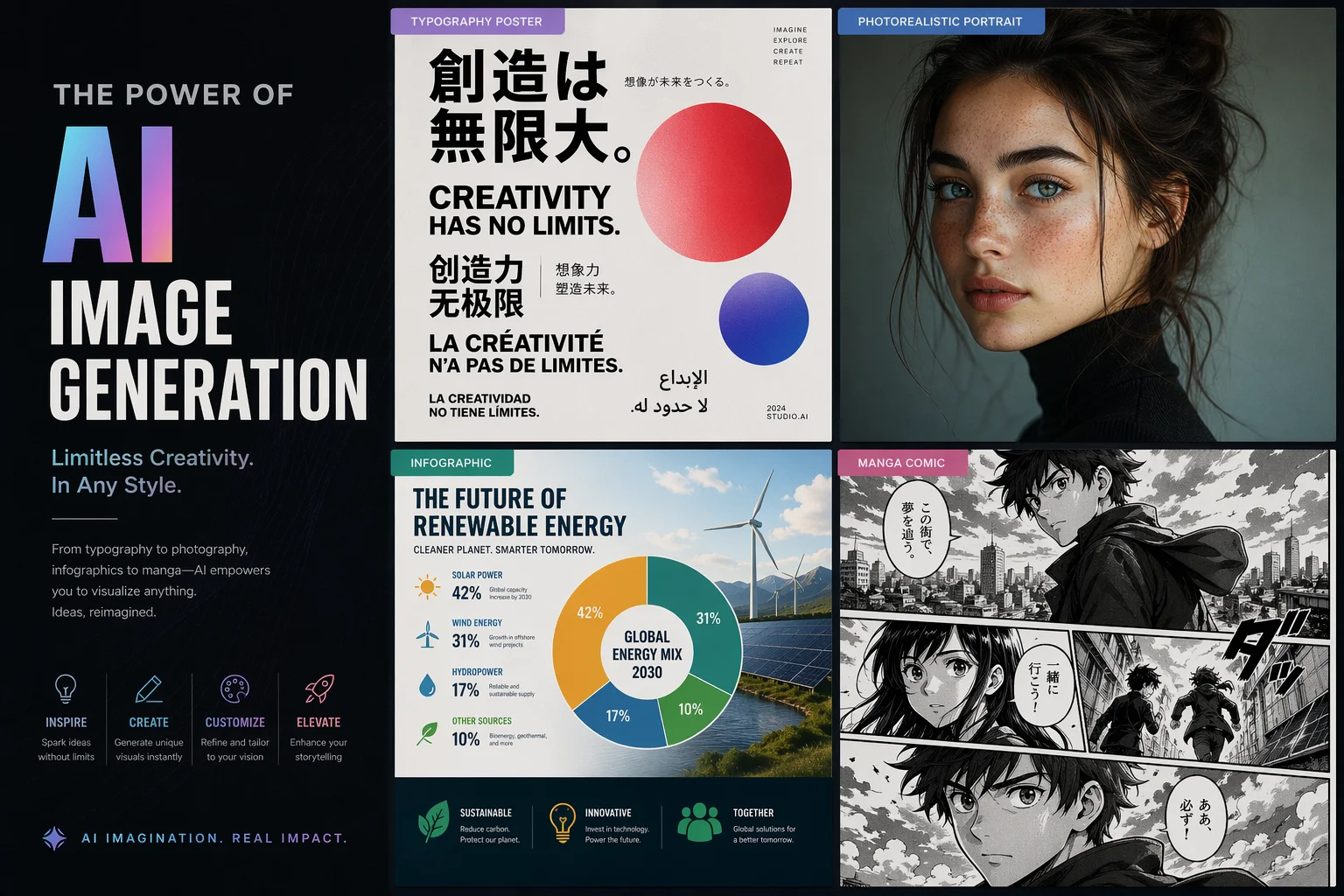
This is the single biggest unlock. OpenAI's prompt guide specifically calls out reliable text rendering with crisp lettering, consistent layout, and strong contrast.
That changes the calculus. "AI images can't do text" used to be a hard line between mood boards and finished assets. With gpt-image-2, the following suddenly enter scope:
- Event posters
- Infographics
- Multilingual promotional art
- Menus, covers, flyers, stickers
- Comic panels with dialogue
- Educational diagrams and flowcharts
- Social media templates
4. Structured and multi-panel content
The docs explicitly extend the capability to:
- Infographics
- Diagrams
- Multi-panel compositions
In other words, it's no longer just "one beautiful picture." It's starting to handle structured visual output — a big deal for anyone building content, education, or marketing automation products.
5. Style control and transfer
The prompt guide highlights:
- Precise style control
- Style transfer with minimal prompting
Useful for:
- Unified brand visuals
- Tone-consistent image series
- Style transfer from a reference image
- Switching between illustration, comic, pixel, photographic, and poster styles
- Consistent characters across scenes
6. World knowledge and scene understanding
The system card emphasizes substantial gains in world knowledge, instruction following, and dense text rendering. That matters for:
- Realistic product placement
- Travel, food, and retail marketing
- Concept art with industry-specific accuracy
- Commercial visuals grounded in real-world context
Where this actually shows up in real products
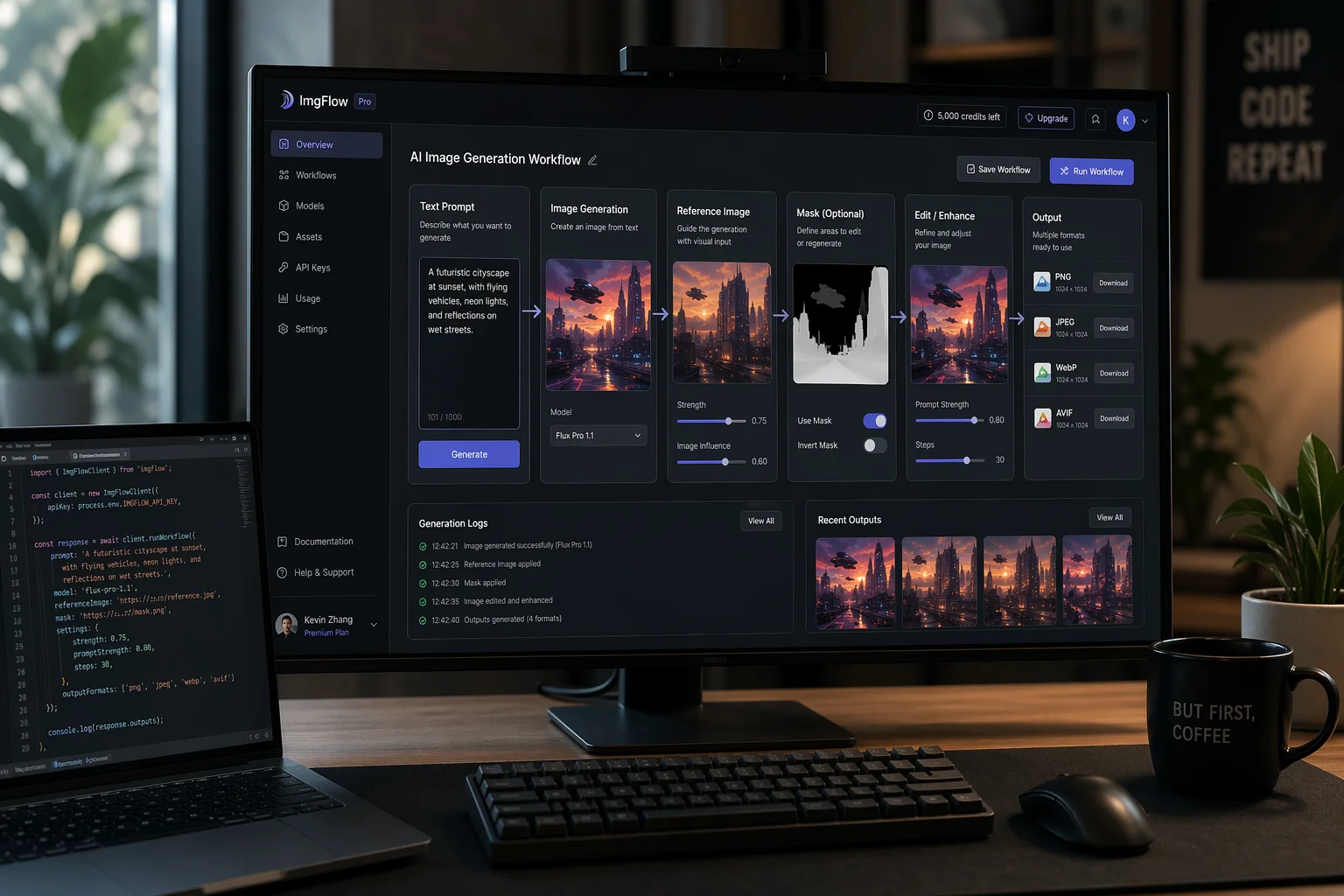
Capability on paper is one thing. Whether a model can carry real user-facing workflows is another. Two tools we recently shipped on PicFixer are only possible because of what this generation unlocks — both were essentially unshippable on older image models.
Manga Translator
Translating a manga page isn't really a translation problem — it's a text rendering problem. Older AI image models couldn't write clean, typeset text inside a panel, let alone preserve the original layout, speech bubble shapes, and comic aesthetic while swapping Japanese for English.
With gpt-image-2, we can:
- Detect and replace text inside speech bubbles
- Preserve panel composition and surrounding art
- Match typography to the comic's visual language
- Support multiple target languages in a single workflow
Previous-generation output was mangled, warped, or barely legible. This generation is the first where the result is actually readable.
Try it → picfixer.ai/tools/manga-translator
AI Interior Design
Redesigning a room from a single photo is the kind of thing older models fundamentally couldn't do well. They'd hallucinate impossible geometry, break the window and door layout, or produce generic "AI-looking" furniture with no relationship to anything real.
gpt-image-2's combination of high-fidelity reference handling, world knowledge, and photorealism lets us:
- Preserve the room's actual architecture
- Swap styles (Scandinavian, industrial, Japandi, mid-century) while keeping the space intact
- Generate furniture that looks like something you could actually buy
- Iterate on a single photo across multiple design directions
Try it → picfixer.ai/tools/ai-interior-design
Both tools sit on top of the same underlying shift: AI image models are no longer mood-board generators. They're becoming production components.
Where it's most valuable
The eight product categories where gpt-image-2 is a clear win:
- AI poster and marketing asset generation
- Article illustration and infographics
- E-commerce product editing and scene variants
- Brand visual asset generation
- Character design with multi-image consistency
- Reference-driven creative editing
- Educational diagrams, flowcharts, explainer visuals
- Multi-turn interactive design assistants
The wins compound when your workflow has any of these needs:
- Text inside the image
- Multilingual output
- Local edits
- Consistent characters or objects
- Multiple iterations
- Production-grade output, not just inspirational stills
My read
If I had to compress it to one line:
gpt-image-2has clearly evolved from "AI image model" into "an image generation and editing model that fits into production pipelines."
The value isn't that individual images look more impressive. It's that:
- First-attempt success rate is higher
- Editing workflows are stable enough to ship
- Text and layout finally work
- It fits into products, not just demos
- Iterative, multi-step workflows actually make sense
For anyone building a product where images are a real output — not a marketing flourish — this is the generation where AI image generation starts to feel less like a novelty and more like a visual engine you can build on. The two tools above are small proofs: categories that simply weren't viable a model generation ago are now shippable.